

Posted on Leave a comment

Healy Schuessler Salts

Mineral salts are essential for proper functioning of human cells. A deficiency or an imbalance of these vital minerals can lead to cell or even organ dysfunction leading to sub-optimal health or disease state. Mineral salts may well be present in our food, yet more often than not, they are not properly absorbed by our body.

A 19th-century German doctor named Dr. Wilhelm Heinrich Schuessler discovered that several mineral salts had notable health benefits; Dr. Schuessler developed these mineral salts homeopathically for the assimilation by the cells of the body. This homeopathic healing-method of cell salts are firstly based on twelve basic remedies used for biochemical treatments; later, he homeopathically added 15 kinds of extra cell salts; totally 27 items are as follow:

No. 1 CALCIUM FLUORATUM (Connective tissue, skin, joints)
No. 2 CALCIUM PHOSPHATE (Bones and teeth)
No. 3 IRON PHOSPHATE (Immune system)
No. 4 POTASSIUM CHLORIDE (Mucous membranes)
No. 5 POTASSIUM PHOSPHATE (Nervous system)
No. 6 POTASSIUM SULPHATE (Metabolism)
No. 7 MAGNESIUM PHOSPHATE (Muscles)
No. 8 SODIUM CHLORIDE (Water regulation)
No. 9 SODIUM PHOSPHATE (Metabolism)
No. 10 SODIUM SULPHATE (Purification)
No. 11 SILICA (Connective tissue, skin, hair)
No. 12 CALCIUM SULPHATE (Joints, pus)
No. 13 POTASSIUM ARSENITE (Skin, vitality)
No. 14 POTASSIUM BROMIDE (Nervous system, skin)
No. 15 POTASSIUM IODIDE (Sign gland)
No. 16 LITHIUM CHLORIDE (Rheumatism, nerves)
No. 17 MANGANESE SULPHATE (Iron System)
No. 18 CALCIUM SULPHIDE (Vitality, body-weight)
No. 19 COPPER ARSENITE (Digestive system, kidneys)
No. 20 POTASSIUM ALUMINUM SULFURICUM (Digestive system, nervous system)
No. 21 ZINC CHLORIDE (Metabolism, womb, nerves)
No. 22 CALCIUM CARBONATE (Vitality, Anti-Aging)
No. 23 SODIUM BICARBONATE (Purification, Body acid balance)
No. 24 ARSENIC IODIDE (Skin, allergies)
No. 25 AURUM CHLORATUM NATRONATUM (Day and night rhythm, female reproductive organs)
No. 26 SELENIUM (Liver, blood vessels)
No. 27 POTASSIUM DICHROMATE (Blood, sugar metabolism)

Posted on Leave a comment

Explanation of Quantum Mechanics’s “Wave-Particle Duality”

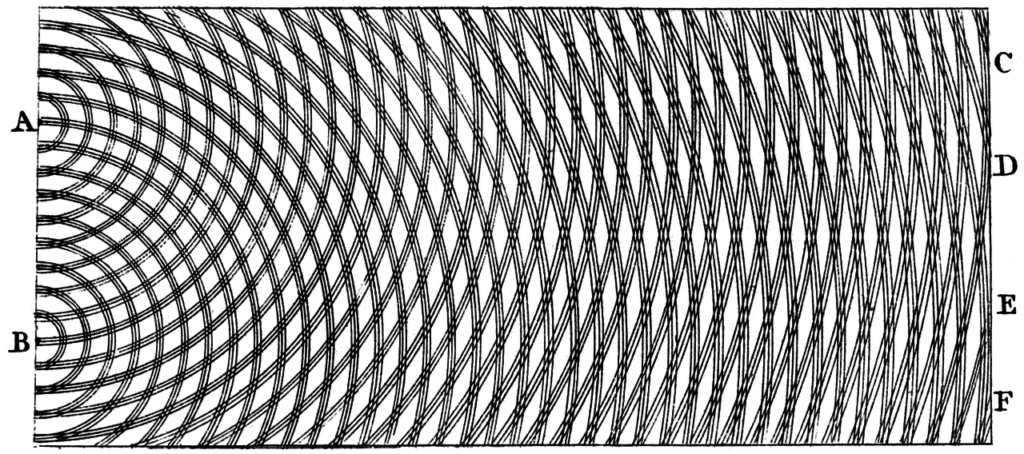
Wave-particle duality (wave-particle duality) means that all particles or quanta can be described not only in particle terms, but also in wave terms. This means that the classic concepts of “particles” and “waves” have lost the ability to completely describe physical behavior in the quantum range. The former constitutes what we often call “matter”, and the typical example of the latter is light waves. The wave-particle duality solves this problem of “pure” particles and “pure” waves. It provides a theoretical framework so that any matter can sometimes exhibit particle properties and sometimes fluctuate properties.

Einstein described this phenomenon like this: “It seems that sometimes we must use one set of theories, sometimes we must use another set of theories to describe (the behavior of these particles), and sometimes we must use both. We encountered A new kind of difficulty, which forces us to use two contradictory viewpoints to describe reality. The two viewpoints alone cannot fully explain the phenomenon of light, but they can be combined together.” Wave-particle duality is One of the basic properties of microscopic particles. In 1905, Einstein proposed the light quantum explanation of the photoelectric effect, and people began to realize that light waves have the dual properties of waves and particles at the same time. In 1924, De Broglie put forward the “material wave” hypothesis, which believed that like light, all matter has wave-particle duality. According to this hypothesis, electrons will also have wave phenomena such as interference and diffraction. This was confirmed by later electron diffraction experiments. Thomas Young did the interference pattern obtained by the double slit experiment.

Posted on Leave a comment

Conference for the Usage of Healy Resonance Function

Date: July 22, 2021 (Thursday)

Venue: Room 10, 15th Floor, Good Hope Building, 5 Sai Yeung Choi Street South, Mong Kok, Kowloon, Hong Kong

Time: 6:30 – 8:00 pm

Topic: Introduce the working principle of the Healy frequency machine resonance program, and share and exchange experience, sincerely invite people who have research or interest in the application of frequency machine resonance in health care to participate, share and exchange experience, welcome to sign up.

To register, please register on Facebook PM or leave a message. You can also check on Whatsapp or call +852 95878788.

Thank you!

Posted on Leave a comment

Explanation of Quantum Mechanics ‘s “Schrodinger’s Cat”

Schrödinger’s full name is Erwin Schrödinger. He is an Austrian physicist and one of the founders of quantum mechanics. He developed molecular biology. Doctor of Philosophy, University of Vienna. Professor of the University of Zurich, the University of Berlin and the University of Graz. Schrödinger’s cat experiment is to put a cat in an opaque box, and then connect the box to an experimental device that contains a radioactive nucleus and a container filled with toxic gas. It is assumed that the radioactive nucleus will have The possibility of decay, if it decays, it will trigger the experimental device, open the container with the poisonous gas, thereby killing the cat. According to quantum mechanics, when the nucleus is not observed, the nucleus is in a superposition of decayed and undecayed. However, if the box is opened after an hour, the experimenter can only see “decayed nuclei and dead cats” or “undecayed” “The nucleus and the live cat” two situations. What does this superposition form mean, that is, the nucleus is both decayed and undecayed… It is a superposition of two states, and only when someone observes it, it will be shown as decay. Or there is no decay. If no one cares about him, he will always be in a superposition state, which is terrible, because the cat will enter a dead and alive state with the superposition of the atomic nucleus.

When you observe this electron, there is obviously only one observation result at a time. This does not mean that it was only in this position before. Because at this time of observation, we must use a probe, such as a photon, to hit him. This photon also carries a certain amount of energy. Therefore, while observing, we have actually changed its properties.

This law is obviously difficult to understand. So when scientists first discovered the quantum world, they were also puzzled by its laws. Some scientists even refused to recognize the authenticity of certain laws, such as the famous scientists Planck and Einstein. So Schrödinger invented the metaphor of “a cat in both states of life and death” to explain this superimposed state (two different properties exist at the same time). Well, when the box is closed, it means that we haven’t observed it yet and we are in an undisturbed state. This is that he is both alive and dead (note that it is not possible to be alive or possibly dead). Our action of opening the box is to measure it, which is equivalent to intervening in his state from the outside world, and his state is changed, thus collapsing to a state, either alive or dead.

Information Source: https://kknews.cc/science/jm9j5vp.html