Posted on Leave a comment

Investigation of Wavelength vs Frequency Relationship to Explain Lifewave PhotoTherapy

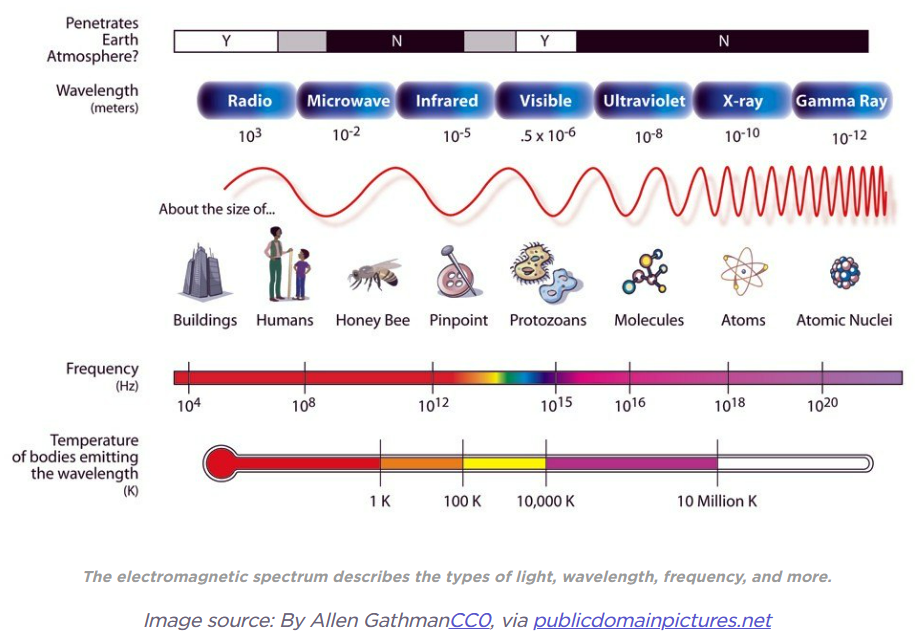
Wavelength and frequency are two interrelated properties of light, with wavelength being the distance between two consecutive peaks or troughs in a wave. For visible light, it is measured in meters (m) or nanometers (nm), and the wavelength determines the color of the light, with violet having the shortest wavelengths and red the longest in the visible spectrum. “Frequency” is the number of wave oscillations or cycles in a given time. Measured in hertz (Hz), or cycles per second, frequency determines the energy of light, with violet having the highest frequency and energy and red the lowest in the visible spectrum.

Wavelength and frequency are inversely proportional to each other, meaning that as one increases, the other decreases, for example, if the frequency of light increases, its wavelength decreases and vice versa. The speed of light in vacuum is constant at about 300,000,000 m/s, which means that for any given frequency of light, we can use the equation to calculate its wavelength, and the speed of light also depends on the medium in which it travels. In a vacuum, the speed of light is a constant equal to exactly 299,792,458 meters per second (approximately 300,000 kilometers per second; 186,000 miles per second; 671 million miles per hour), which according to special relativity is the speed at which any signal or matter travels through the universe . However, when light travels through a transparent material such as glass or air, its speed is reduced by a factor known as the material’s refractive index. The ratio of the index of refraction to the speed of light in a material is 1. For example, air has a refractive index of about 1.0003, which means that light travels about 0.03 percent slower in air than in a vacuum. Water has a refractive index of about 1.33, which means that light travels 25% slower in water than in a vacuum.

Different types of light have different wavelengths and frequencies, but they all travel at the same speed in a vacuum. However, when they enter a material, their speed can vary depending on wavelength and frequency. That’s why white light splits into its different colors as it passes through a prism: each color travels through the glass at a slightly different speed and index of refraction, and so bends at slightly different angles. Different types of light are classified into the electromagnetic spectrum by their wavelength or frequency. The electromagnetic spectrum ranges from radio waves, which have the longest wavelength and lowest frequency, to gamma rays, which have the shortest wavelength and highest frequency. Visible light is the small portion of the spectrum visible to the human eye and consists of red, orange, yellow, green, blue, indigo, and violet (ROYGBIV) in increasing frequency and decreasing wavelength. Here are some examples of different types of light speeds in vacuum and air:

  • Radio waves: speed of light in air v = 299,702,547 m/s
  • Microwave: the speed of light in air v = 299,705,543 m/s
  • Infrared radiation: speed of light in air v = 299,707,540 m/s
  • Visible light: speed of light in air v = 299,709,538 m/s
  • Ultraviolet light: the speed of light in air v = 299,711,536 m/s
  • X-ray: the speed of light in air v = 299,713,534 m/s
  • Gamma rays: the speed of light in air v = 299,715,532 m/s

Radio waves are a type of light. They are part of the electromagnetic spectrum, which is the range of all types of electromagnetic radiation. Electromagnetic radiation is a propagating and propagating energy that can describe streams of massless particles called photons, each traveling in a wave-like pattern at the speed of light. Photons have different energies depending on the frequency and wavelength of the waves they form. The electromagnetic spectrum is divided into different regions according to these characteristics. Of all electromagnetic waves, radio waves have the longest wavelength and the lowest frequency and energy, and they are usually measured in meters or centimeters. Radio waves are used in communications, such as television, radio and satellite transmissions, and they can travel long distances and penetrate certain materials, but they can also be blocked or reflected by other materials.

Visible light is the part of the electromagnetic spectrum that humans can see with the eyes and consists of red, orange, yellow, green, blue, indigo and violet (ROYGBIV), arranged in order of increasing frequency and energy and decreasing wavelength. Visible light, usually measured in nanometers (nm), is used in vision, photography, lighting, and many other applications. It can be reflected, refracted or absorbed by different materials. For example, infrared light has a wavelength between 700 and 1,000 nanometers; if one wavelength is 700 nanometers, its corresponding frequency will be 428 GHz, which can penetrate the inner layer of the skin about 2 to 7 centimeters deep, so it can reach muscles, nerves and even bones, it is best for treating inflammation. Other suitable infrared frequencies can also treat our body.

The Lifewave patch company does not specify the frequency of the Lifewave patch, but it is related to the frequency of the reflected infrared light. Infrared is an electromagnetic radiation with a wavelength in the range of about 700 nm to 1 mm and a corresponding frequency in the range of about 430 THz to 300 GHz, and not all infrared rays have the same effect on the body, and different wavelengths, frequencies and energies have different The biological response has different treatments.

Lifewave patches are produced using a mixture of amino acids, water, stabilized oxygen and natural organic compounds that do not enter the body but reflect visible and infrared light back into the body for frequency healing to the body. The patches are attached to the body with a hypoallergenic adhesive, and they can also be placed on nighttime clothing, which is especially useful for younger children. The Lifewave patch is FDA registered and WADA approved, making it safe for use by all people.

Posted on Leave a comment

Introduction of Lifewave Icewave PhotoTherapy Frequency Patch

Chronic pain affects 1.5 billion people worldwide, resulting in billions of dollars in healthcare costs and lost productivity each year, and the Lifewave Icewave PhotoTherapy Frequency Patch is designed to quickly relieve pain and discomfort at the source, for example, if you have knee pain, you Patches can be placed around the area for quick pain relief, and if there is generalized pain, there are different placement options that can produce equally effective pain relief. Unlike all other pain relief products on the market, IceWave utilizes the healing properties of light and is a non-drug, non-addictive approach to healthcare, especially without any harmful side effects compared to mainstream pharmaceutical pain relievers. The Lifewave is a safe, powerful and inexpensive solution for all levels of pain, including :

  • Quick Pain Relief
  • Effective in 30 seconds (safe, natural, non-toxic)
  • Safe and Natural Pain Relief
  • Can be used for systemic and localized pain
  • Fast acting and not addictive
  • Use patch instructions

When using the Lifewave Icewave PhotoTherapy Frequency Patch, place one white and one tan patch around the painful area of the body, placing the patch on clean, dry, undamaged skin. The patch can be worn for up to 12 hours. Please discard the used patch after use. Drink plenty of water to keep your body hydrated when using this product. Firstly, remove only half of the patch backing until an effective placement is found, if the pain does not relieve within 10 seconds, move to the next position until find to relieve pain in that area, this can be used on any part of the body to find the most valid location. In addition, using the clockwise or cross test is a good way to find out the best position, it provides fast and effective results for non-specific, localized musculoskeletal pain, as shown in Fig. 1.0 to 1.6 below The position is moved until there is significant pain relief and/or increased mobility.

Posted on Leave a comment

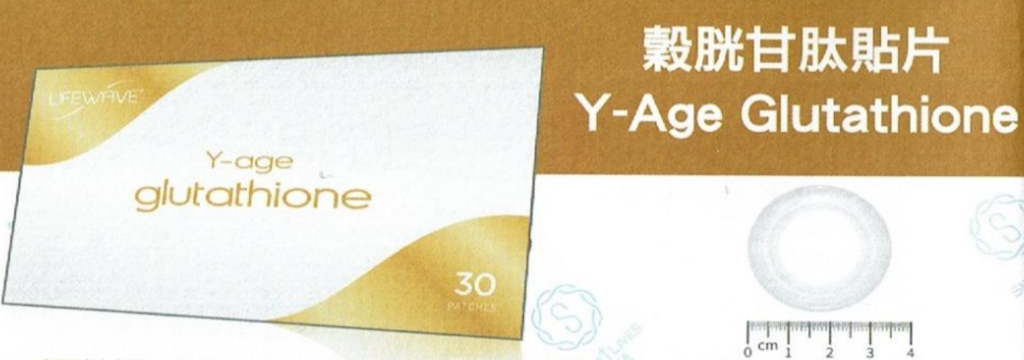
Introduction of Lifewave Glutathione PhotoTherapy Frequency Patch

Glutathione is the body’s master antioxidant and detoxifying antioxidant, it is found in nearly every human cell. According to medical experts, longevity is directly equated to the amount of glutathione in your body, which has the ability to protect and detoxify, and it also provides critical immune system support. In fact, glutathione research has led to thousands of clinical studies of this powerful antioxidant, and its importance to the immune system as a primary defense against invaders from the outside and inside the body cannot be overemphasized Too much. Use Lifewave Glutathione Phototherapy Frequency Patch to keep your body strong without drugs or chemicals, there is no other single product on the market that supports your immune system like Y-Age Glutathione Patch. Its functions include the following :

  • Antioxidants (300% increase in 24 hours)
  • boost immune system
  • detoxification
  • beauty whitening
  • liver detox
  • Eliminate heavy metals

When using the Lifewave Glutathione Phototherapy Frequency Patch every week, please stick it on the body. The patch can be pasted on the clean and clean skin surface. The patch effect can last for 12 hours. Use the patch for 5 to 7 days, on the following points to rotate. When combining with other Y-Age products, use any 2 patches at any of the 2 Y-age point locations shown, place the patch on the midline or right side of the body. Please discard the used patches after use, and drink plenty of water to keep your body hydrated when using this product.

Posted on Leave a comment

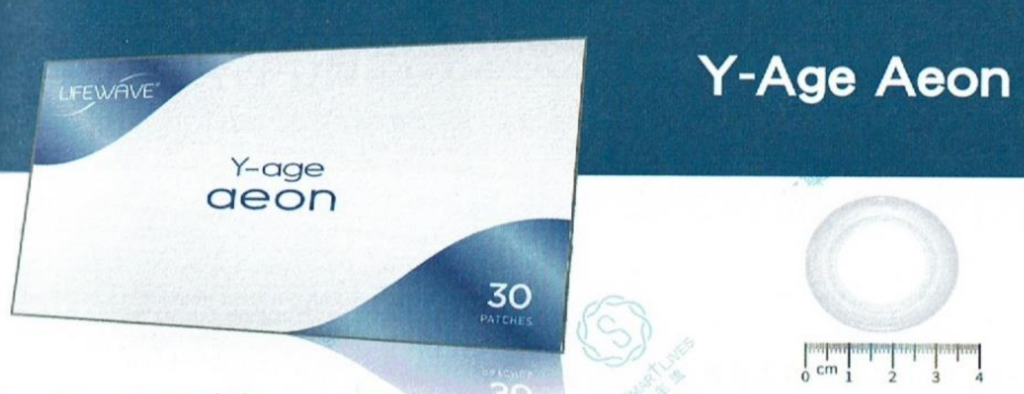
Introduction of Lifewave Aeon X15 PhotoTherapy Frequency Patch

Lifewave Aeon X15 PhotoTherapy Frequency Patch can increase physical strength and reduce mental stress. It can reduce stress within 10 minutes, reduce inflammation, and reduce inflammation before other problems can be solved, eliminate mental fatigue, and anti-aging. No one is immune to stress, we have made stress a part of our lifestyle, and the Y-Age Aeon X15 PhotoTherapy Frequency Patch provides powerful health care without a trip to the doctor or pharmacy. It has no negative health effects and you will experience a higher quality of life.

The Y-Age Aeon X15 PhotoTherapy Frequency Patch reflects specific wavelengths of light to stimulate specific points on the skin, thereby reducing inflammation and increasing the production of antioxidants in the body. When using the X15 patch every week, please stick it on the body. The patch can be pasted on the clean and clean skin surface. The effect of the patch can last for 12 hours. Use the patch for 5 to 7 days, and rotate on the following points. When combining with other Y-Age products, use any 2 patches at any of the 2 Y-age point locations shown, place the patch on the midline or right side of the body. Please discard the used patches after use, and drink plenty of water to keep your body hydrated when using this product.

Posted on Leave a comment

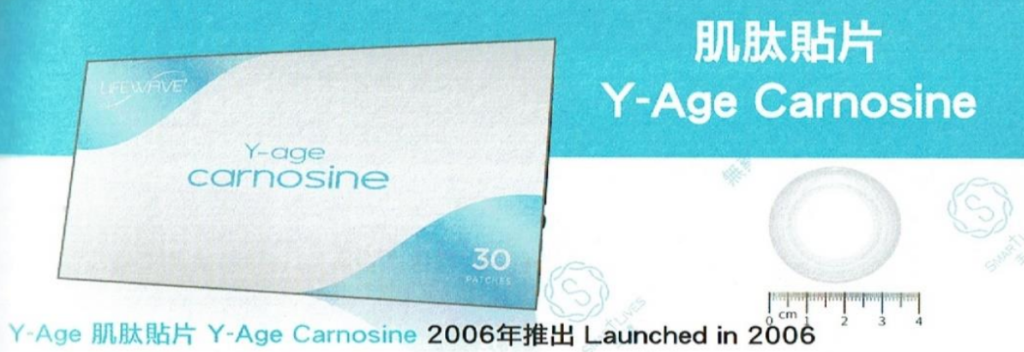
Introduction of Lifewave Carnosine PhotoTherapy Frequency Patch

Many athletes and fitness enthusiasts push themselves further with the Y-age Carnosine PhotoTherapy Frequency Patch, which improves strength, flexibility, and endurance, which together form the basis of a strong, active lifestyle and can help Anyone who experiences optimal vitality in their daily life. The Y-age Carnosine Patch reflects specific wavelengths of light to stimulate specific acupressure points on the skin, helping to increase endurance and improve strength and flexibility, including:

  • Increase stamina and stamina
  • improve arrhythmia
  • Improves muscle strength and imparts flexibility
  • 125% increase in battery capacity
  • Improve digestive problems
  • Improve the degeneration of the original tissue
  • Improve dementia
  • Improve strength and flexibility
  • improve overall health
  • Improve the bioelectric properties of organs

Use the Carnosine Patch 1 to 3 days a week, rotating the following points. When combining Y-Age products, use any 2 patches at any of the 2 Y-age point locations shown, placing the patch on the midline or right side of the body. Apply the patch to clean, dry skin in the morning and leave it on for up to 12 hours. Discard the patch after use. Keep body hydrated by drinking plenty of water while using this product.